The Great British Paranoia: Why Does England Still Vote for Its Own Arsonist? By Spyros Andreits
…When a society rewards the demagogic instigator of its own decline, the crisis ceases to be merely governmental and transforms into a crisis of identity…
The departure of Keir Starmer from the leadership of the British government—coincidentally falling almost exactly on the tenth anniversary of the historic referendum to leave the European Union—seals a prolonged period of institutional decay. Within these ten years, the political vortex unleashed by exiting the EU has led to the collapse of six different prime ministers. The country that once stood as the global paragon of parliamentary stability is now experiencing unprecedented governmental volatility, starkly reminiscent of the most fragile political eras of Rome or Brussels.
The fact that Starmer held the reins for two years now plays out as a remarkable achievement. He was a technocrat of structured speech, yet one profoundly lacking in political instinct and charisma. He assumed power primarily as a counterweight to the absolute degradation left behind by his predecessors: the eccentric and incoherent governance of Boris Johnson, the brief economic fiasco of Liz Tras, and the utter lack of political weight of Rishi Sunak.
Nevertheless, Starmer’s tenure was marred by constant U-turns, the economic blunders of his Chancellor, Rachel Reeves, and a total inability to control his parliamentary group. The definitive blow came with the crisis in the defence sector, which exposed the operational nakedness of the country’s armed forces, forcing close allies to step in to secure British territories.
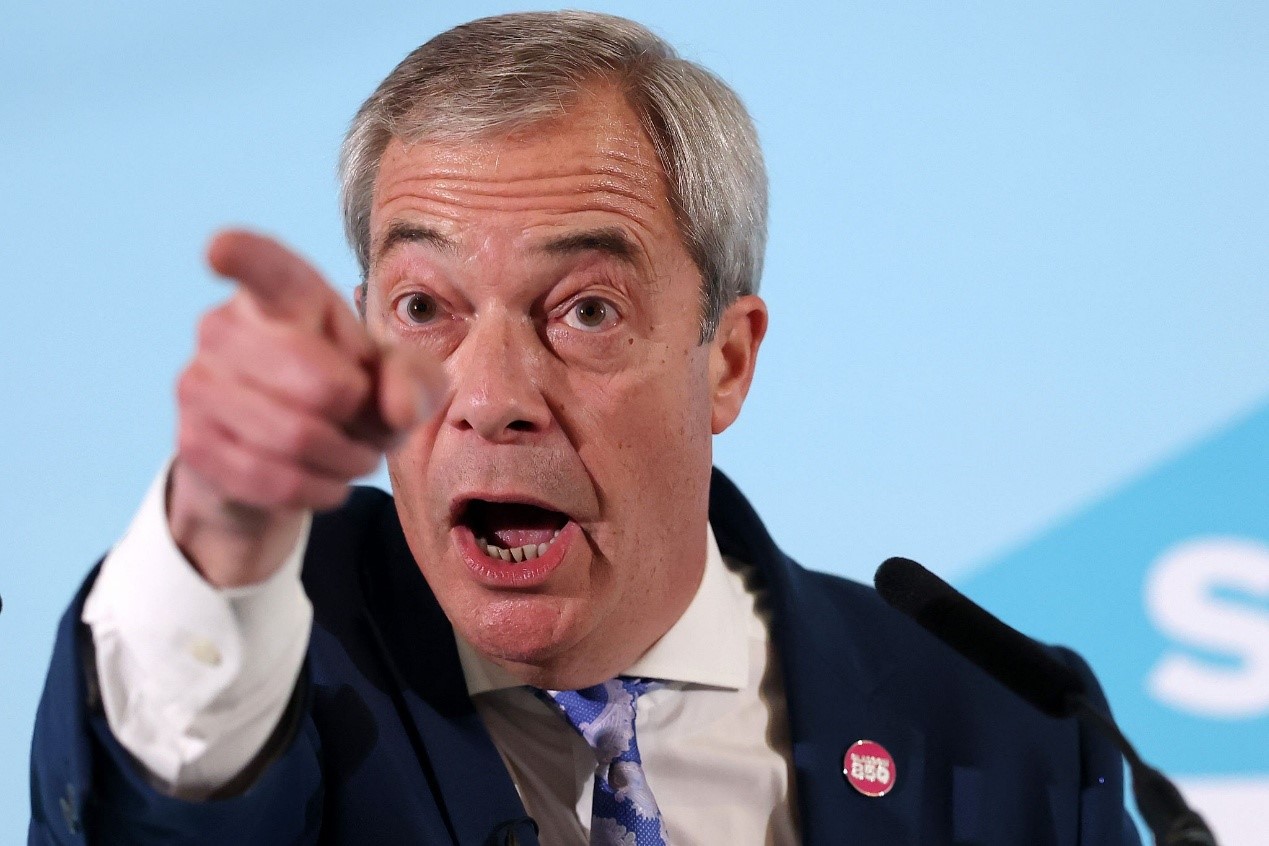
Despite his evident inability to govern, the true mystery does not lie in Starmer’s downfall. The deeper question, which verges on collective psychopathology, is entirely different: How is it that, at a time when the price of isolation is visibly manifest in every facet of daily life, the man who spearheaded this national misadventure—Nigel Farage (as he himself insists his name be pronounced)—remains at the epicentre of developments and dominates voters’ preferences? Are English voters, in the end, victims of utter political naivety?
From Delusion to Economic Subsidence
A glance at the cold numbers suffices to demonstrate the scale of the disillusionment. Promises of an economically almighty Britain dominating outside European constraints have proven devoid of substance. Reputable international studies, involving the Bank of England, record a dramatic contraction of national wealth, with GDP showing losses reaching as high as 8%.
At the same time, the issue of border management, which formed the cornerstone of the Leave camp’s argument, has devolved into a farce. The departure of European citizens stripped the health system and universities of critical and specialized talent. Yet, migratory flows were not curtailed; they were simply replaced by populations coming from Asia and Africa—people with no legal recourse to the rest of Europe.
British society has sunk into a morass of disappointment. Incapable of managing the weight of their own choices, citizens vent their rage by perpetually changing governments. And yet, the man who opened this Pandora’s box continues to reap political dividends from the crisis.
The “Farage” Phenomenon: The Survival of a Political Demagogue
Nigel Farage stands as a rare example of a controversial politician who manages to feed off the chaos he himself created. The influence he exerts over the public relies on a peculiar strategy of disavowing all responsibility.
Instead of apologizing for the fact that his blueprint led the country into a dead end, Farage cunningly shifts the blame, claiming that his idea was sound but was allegedly sabotaged by incompetent managers of power.
This rhetoric offers a convenient psychological escape hatch for millions of citizens. To admit that one has been conned demands a brave dose of self-reflection. Farage relieves them of this burden, telling them: “You didn’t make a mistake; it is the political establishment that failed to dare a clean break.” In this manner, the architect of the crisis is transformed in the eyes of his followers into the sole saviour who can finish the job.
Collective Denial of Reality
Right here lies the root of the problem: Why does the electorate cling to this choice? The answer is not related to the intelligence of the voters, but to a deeper psychological trap, reminiscent of a collective Stockholm Syndrome.
A significant portion of society has become addicted to easy populism. Instead of steering them toward rationality, harsh reality drives them into an even more extreme dogmatism. They seek the cure in the exact same poison that caused the disease. Farage’s rise in the polls reveals that many prefer to sustain a national illusion rather than confront the reality of their country’s downgrading.
This political blindness shows that the consequences of the 2016 choice are not merely economic or institutional, but structural. It is a historical blunder that has warped the criteria of political thought, making the restoration of logic exceptionally difficult. When a society rewards the demagogic instigator of its decline, the crisis ceases to be merely governmental and transforms into a crisis of identity.
Consequently, Great Britain appears today trapped in a vortex of self-destruction. As economic hardship intensifies and London’s international appeal wanes, the more sycophantic demagogues of Nigel Farage’s ilk will find fertile ground to cultivate new chimeras.
The tenants of Downing Street will continue to rotate at high speed, state planning will fall flat, and the country will plunge into melancholy. However, as long as the electorate refuses to shoulder its share of responsibility and insists on following the sirens of Farage, the United Kingdom will remain the most characteristic cautionary tale in modern Western history. The problem was never exclusively Starmer or his predecessors. The problem is a society that has lost its bearings and continues to trust the very man who led it into an economic and political quagmire.